Mounting a TV on the wall is one of the most popular upgrades in any living room. And one of the most common questions we get is: can you add an outlet behind the TV? Yes, we can. But many homeowners are surprised by what that actually involves.
Often the expectation is that an electrician can somehow run a new wire to the TV location without opening the wall. Unfortunately, that’s not how it works. Here’s a real example of how HAXX does it, and why it’s done this way.
Why you can’t just “fish” a wire anywhere
Walls aren’t hollow boxes. Inside every wall there’s a frame of wood studs, usually 16 inches apart, and often horizontal blocking between them. Exterior walls are also packed with insulation. A new wire has to pass through all of that to get from the power source to the new outlet.
When the new outlet is right above an existing one in the same stud bay, an electrician can sometimes fish the wire through a small hole. But when the existing outlet is several feet away, across studs, around a fireplace or at a different height, the only way to run the wire properly is to open the wall along the route.
A real example: a TV outlet next to a fireplace
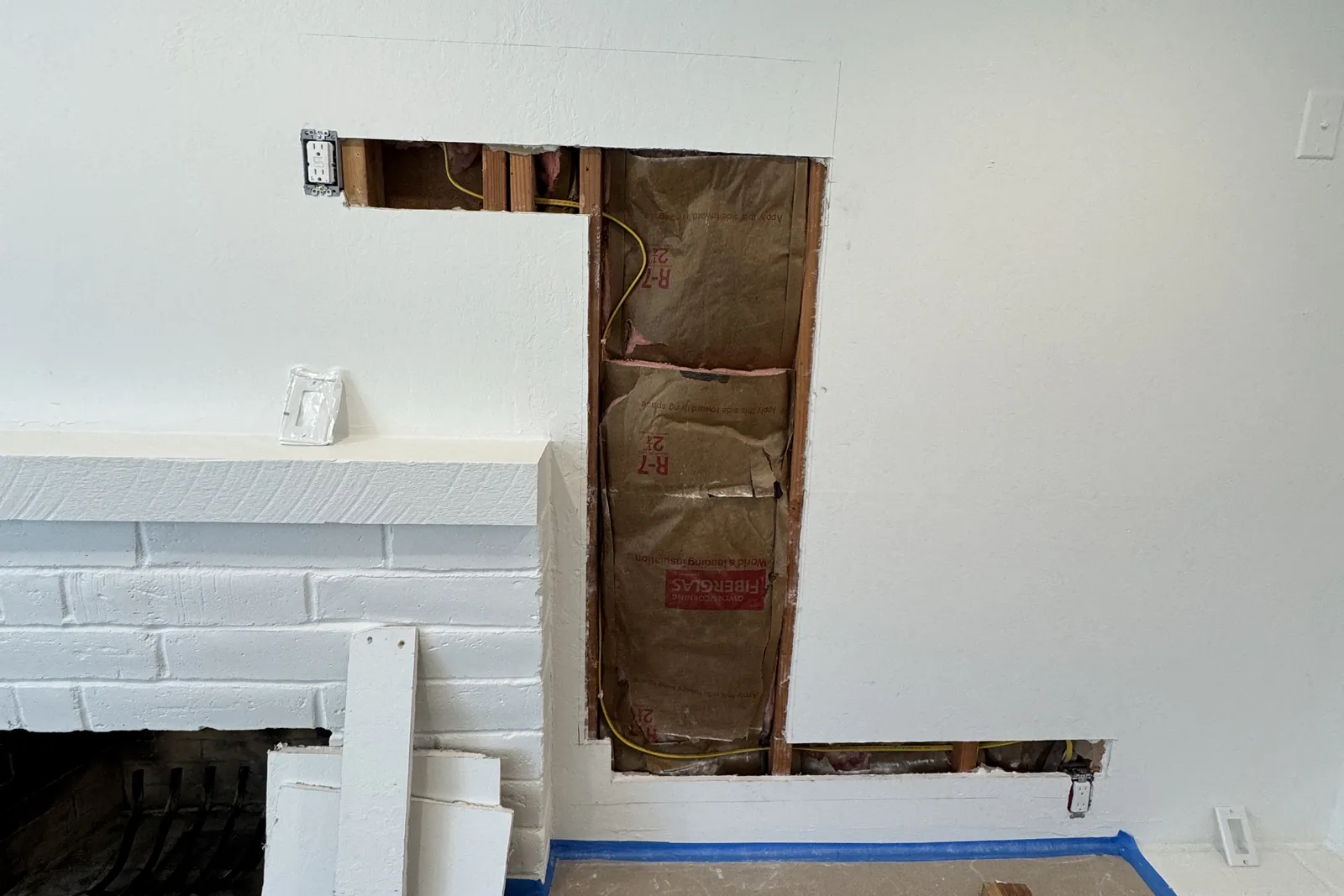
In this living room, the homeowner wanted power at TV height beside the fireplace. The nearest power was an outlet down near the floor, several stud bays away.
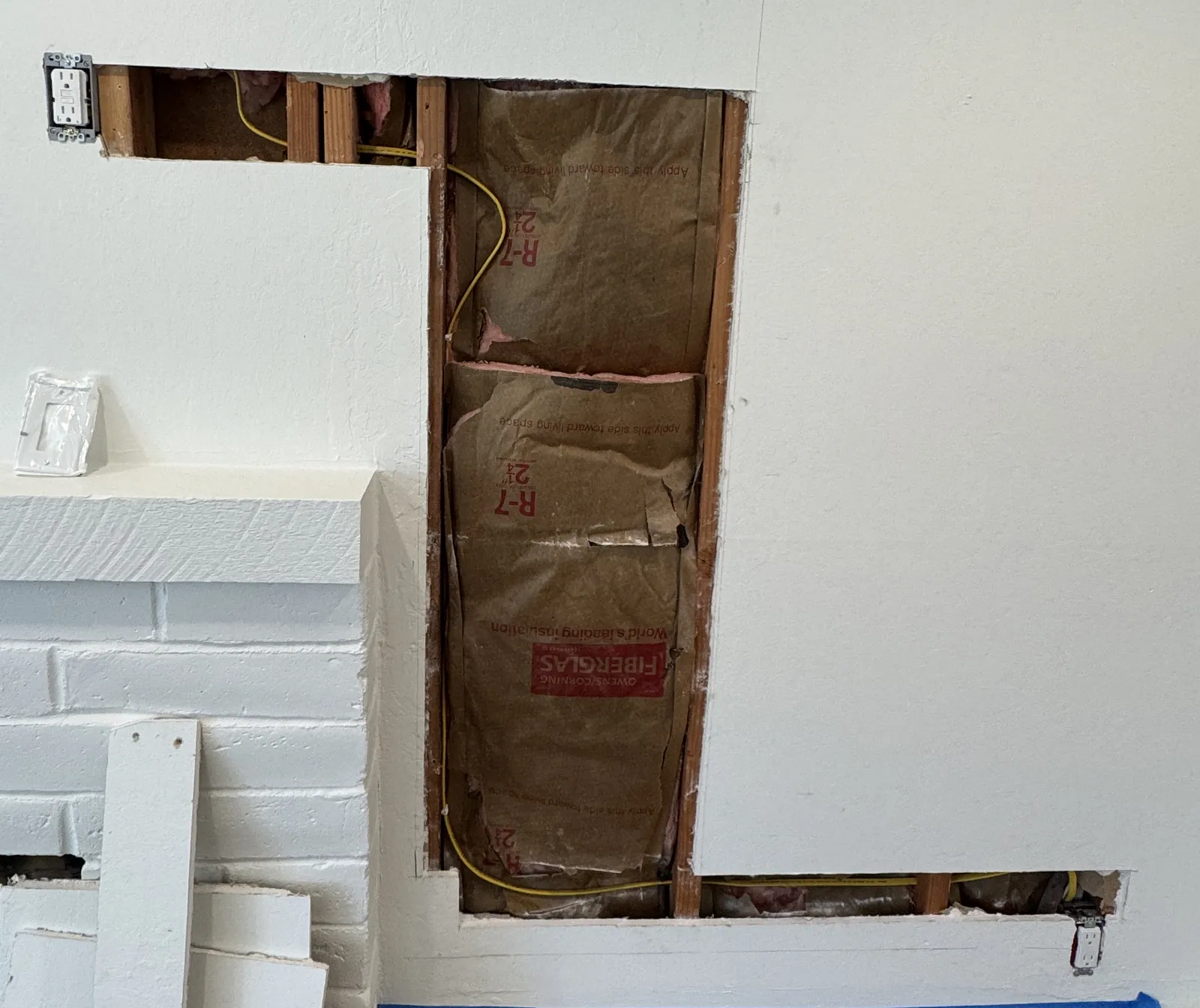
Here’s what the job involved:
- Planning the route. We found the closest suitable power source and planned the shortest safe path to the new outlet location.
- Opening the wall. The drywall was cut in clean, straight sections along that path, so the pieces are easy to patch afterward.
- Running the cable through the framing. The new cable was run through the studs, up one stud bay and over to the new outlet box, working around the insulation.
- Installing the new outlet. The new outlet was mounted in a proper box at TV height.
With the wall open, everything can be done right: the cable is supported and protected inside the framing, the connections sit in proper boxes, and nothing is hidden where it shouldn’t be.
What about running the TV cord inside the wall?
It’s tempting to drill two holes and push the TV’s power cord or an extension cord through the wall. Don’t do it. Flexible cords aren’t made to be hidden inside walls, and the electrical code doesn’t allow it. A cord in the wall can be damaged, overheat and start a fire where no one can see it. The safe way to put power behind a TV is a real outlet, wired with the right cable.
Want an outlet behind your TV? HAXX licensed electricians plan the route, run the wiring and install the outlet safely. Find your city on our service area page or see all our services.
Tips before you mount your TV
- Decide on the TV position first. Know the exact height and location before the outlet goes in, so it ends up hidden behind the screen.
- Think about cables, too. If you’ll want HDMI or other cables hidden in the wall, plan that at the same time so the wall is only opened once.
- Expect some wall repair. When the power source is far away, opening the wall is part of the job. Clean, straight cuts make the patch much easier.
- Use a licensed electrician. New wiring inside walls should be done right the first time. It’s hard to see, and hard to fix later.
Frequently asked questions
Can an electrician add an outlet behind my TV without opening the wall?
Sometimes, if there’s power directly below in the same stud bay and nothing blocks the path. If the nearest outlet is farther away or across studs, the wall has to be opened along the route.
Can I run my TV’s power cord through the wall?
No. Power cords and extension cords aren’t allowed to be hidden inside walls. The safe option is a new outlet behind the TV, wired with proper in-wall cable.
Will my wall be damaged?
The drywall is cut in clean sections along the wire route. Once the wiring is done, those sections are patched, and the wall can be finished and painted.
Ready to mount your TV? Call HAXX Heating, Air & Electrical at (408) 901-8315 or book online. We’ll install an outlet that’s safe for you and your home.
← All articles