

Appliance Repair | Dishwasher Repair
San Jose dishwasher repair for poor cleaning, drainage problems and leaks.
When the dishwasher stops cleaning well, leaves standing water, leaks onto the floor or starts failing mid-cycle, HAXX helps identify the fault and move the repair forward with a more organized service process.
Common Service Calls
Dishwasher problems usually show up in results before they show up as a full shutdown.
Many dishwasher repair calls begin when the machine still runs, but no longer finishes the job correctly. Cleaning quality drops, water stops clearing, drying becomes weak or the cycle starts leaving a mess behind instead of solving one.
Most bookings happen when the dishwasher is running, but not delivering a clean outcome.
Dishwasher repair is often about restoring a cycle that fills, washes, drains and dries the way it should. Once one part of that sequence breaks down, the kitchen starts feeling the difference quickly.
Food residue, film or poor overall cleaning usually point to a wash-path problem rather than a one-time loading issue.
If the tub is not draining properly, the dishwasher stops being usable even if the machine still powers through part of the cycle.
Water outside the dishwasher can signal seal, drain, connection or cycle-control problems that should not be left alone.
The dishwasher may stop mid-run, fail to dry well or leave the load feeling unfinished after a full cycle.
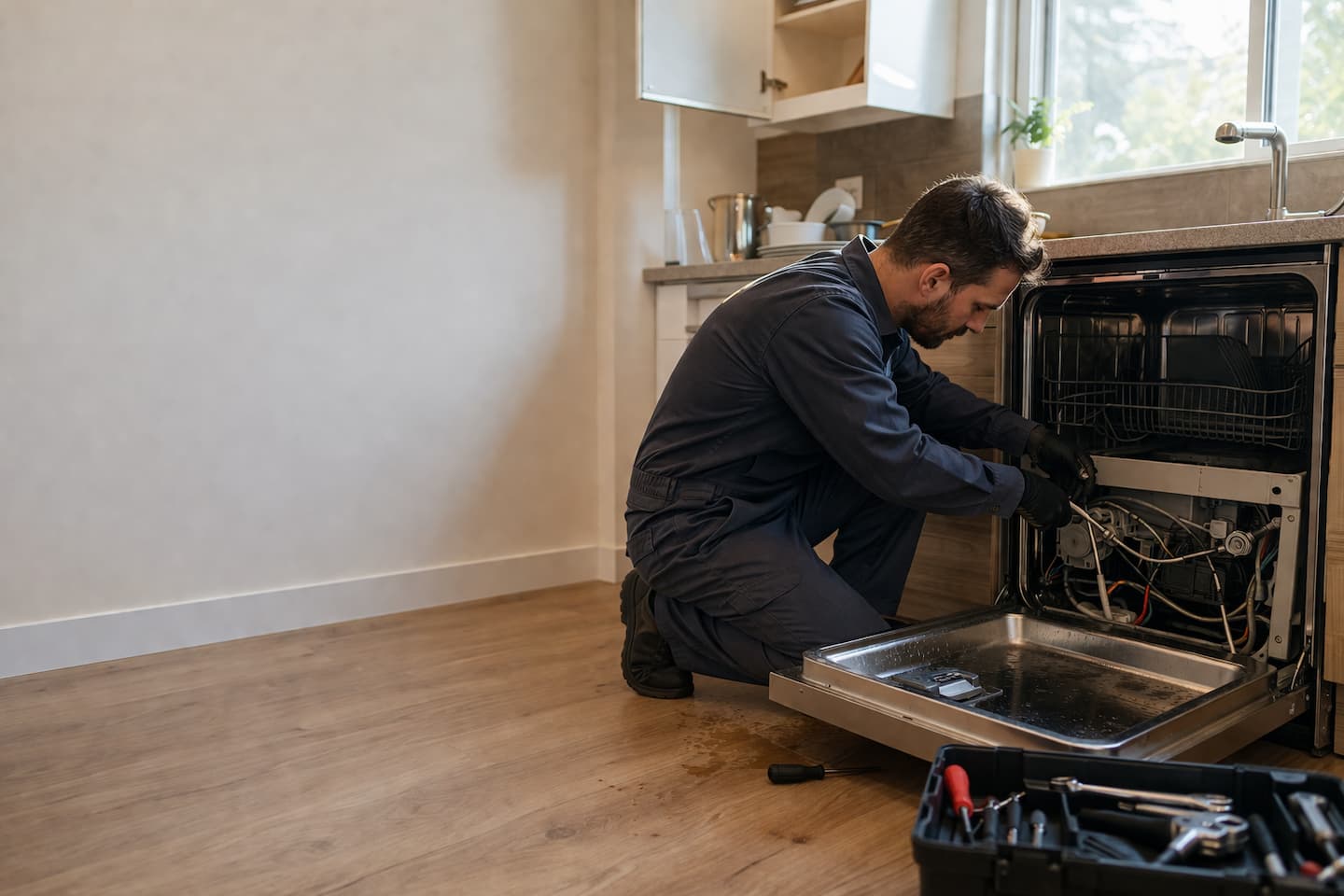
Dishwasher problems affect more than convenience because they create repeat cleanup, sink overflow and sometimes floor or cabinet moisture issues too.
If the dishwasher stops finishing the cycle correctly, the machine is already telling you the wash path needs attention.
The issue is not only one dirty load. It is the loss of a dependable kitchen workflow around cleaning, draining and drying that the appliance is supposed to handle every day.
Cycle Path Diagnosis
Dishwasher repair starts with where the wash cycle is breaking down.
A dishwasher can seem like it has one simple issue when the actual failure is sitting in fill, wash circulation, drain behavior, heating or controls. Better repair depends on tracing the stage of the cycle that is no longer doing its job.

The symptom on the dishes is often only the last sign of a deeper cycle problem.
Dirty plates, pooled water and weak drying may all look separate at first, but they often connect back to how the dishwasher is filling, circulating, draining or finishing the cycle.
HAXX works through the stages that decide whether the dishwasher can complete a usable wash cycle.
Repair scope depends on the machine and the complaint, but dishwasher calls usually center on the parts and behaviors that determine whether the load can be washed, cleared and dried the way the appliance is meant to handle it.
If the machine is not bringing in the right amount of water, the rest of the cycle starts from a weak position immediately.
Poor movement inside the tub can leave the dishwasher running while still failing to clean the load properly.
Standing water and incomplete clearing often point toward the part of the cycle that is supposed to move used water out cleanly.
Leaks and cycle interruptions can come from how the dishwasher is containing water and securing the run.
Wet dishes at the end of the cycle often mean the finishing stage is no longer performing the way it should.
If the dishwasher stops mid-cycle or behaves inconsistently, the repair path may sit in how the machine is being directed through each stage.
The goal is not only to get the machine running again. It is to restore a cycle that actually clears dishes, drains properly and leaves the kitchen in a better condition than it found it.
Problem Clusters
Most dishwasher repair calls land in cleaning, drainage or leak-related failure.
Homeowners may describe different symptoms, but those symptoms usually collapse into a few core repair paths. Framing the problem correctly helps make the next decision cleaner and more useful.
When the dishwasher runs but dishes still come out wrong.
This cluster is about poor wash results, residue, cloudiness and overall cycle performance that no longer leaves the load truly finished.
- Dishes stay dirty or greasy after normal use
- Cleaning feels uneven across racks or cycles
- The machine works, but no longer produces a reliable wash result
When the machine cannot clear water the way it should.
This is the side of dishwasher repair focused on standing water, incomplete draining and the overall end-of-cycle cleanup problem.
- Water remains at the bottom after the cycle ends
- The dishwasher smells or feels unfinished after running
- The sink and dishwasher workflow starts backing into each other
When the dishwasher creates more mess than it removes.
Some repair calls are less about cleaning and more about keeping water contained, finishing the cycle properly and protecting the kitchen around the unit.
- Water shows up on the floor or around cabinetry
- The cycle ends wet, incomplete or interrupted
- The machine becomes harder to trust unattended
Why HAXX
Dishwasher repair should restore a cycle the kitchen can depend on.
The real goal is not only powering the machine back on. It is restoring a dishwasher that can clean, drain and finish the cycle in a way that feels dependable enough to put back into normal kitchen use.
HAXX approaches dishwasher repair as a full cycle-performance problem, not just a quick appliance patch.
The service call needs organized diagnosis, clearer communication and a practical explanation of why the machine is no longer finishing the job properly. That helps the homeowner move from frustration to clearer next steps faster.
The homeowner gets a stronger read on which stage of the dishwasher is actually failing and why the symptom is showing up.
The repair discussion stays tied to cleaning results, drainage and moisture risk rather than vague appliance language.
The next step should make sense for both the machine condition and the kitchen routine the appliance is supposed to support.
Why homeowners call HAXX when the dishwasher stops feeling dependable.
Once the dishwasher starts failing its cycle, the kitchen loses more than convenience. It loses workflow, cleanup support and confidence that the machine can be trusted to finish cleanly.
The homeowner needs to know the dishwasher can return to washing dishes properly rather than repeating bad results cycle after cycle.
Drainage and leak behavior need to feel stable enough that the machine is not creating a second kitchen problem around the repair.
If the stronger path is repair, follow-up work or replacement discussion, that direction should be clear enough to act on confidently.
Dishwasher Repair FAQ
Common questions before booking dishwasher repair.
Dishwasher service is usually booked when the machine still partly runs but no longer finishes the wash cycle the way it should. These are some of the most common questions that come up before the visit.
Can you repair a dishwasher that runs but does not clean well?
Yes. That is one of the most common dishwasher repair calls. A machine can still complete much of the cycle while failing to deliver usable wash results.
What if there is water left in the bottom after every cycle?
That is a real repair signal. Standing water usually means the dishwasher is not completing the drain portion of the cycle the way it should.
Is a leaking dishwasher something to book quickly?
Yes. Even a small leak can create cabinet, flooring or moisture problems around the unit, so it is better to get the repair path identified before that risk grows.
Will you tell me if repair no longer makes sense?
Yes. If the stronger direction is to stop investing in the machine and discuss replacement instead, HAXX will keep that decision clear and practical.
Book Dishwasher Repair
Book dishwasher repair with HAXX.
If the dishwasher is no longer cleaning properly, leaving standing water or creating leak concerns around the kitchen, HAXX can help move the service call forward with more organized diagnosis and a clearer repair path.
