
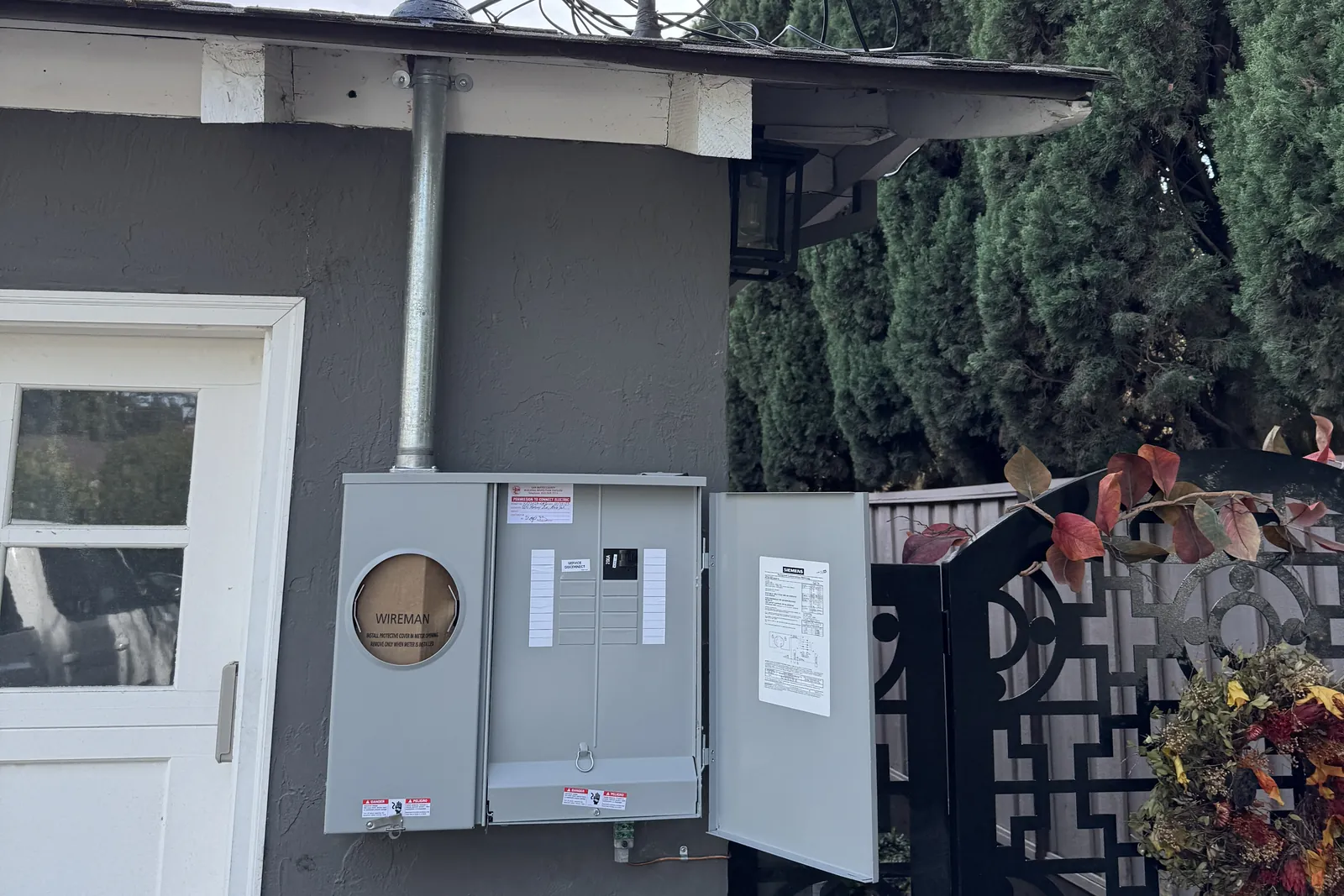
It’s one of the first questions we hear when a homeowner decides to upgrade an electrical panel: how long will PG&E take? The honest answer is that it depends. On a home with overhead service, where the power line runs from a pole to a mast on your roof, the PG&E side of the job can take anywhere from about two months to several years.
Here’s what drives that timeline, what can slow it down, and how to plan so your upgrade goes smoothly.
Why PG&E is involved at all
A main panel upgrade usually means a new meter and main panel and often a new service mast. Your contractor can install the new equipment, but only PG&E can disconnect the old service, connect the new one and set the meter. Until PG&E reviews the project and schedules that work, the new panel sits waiting.
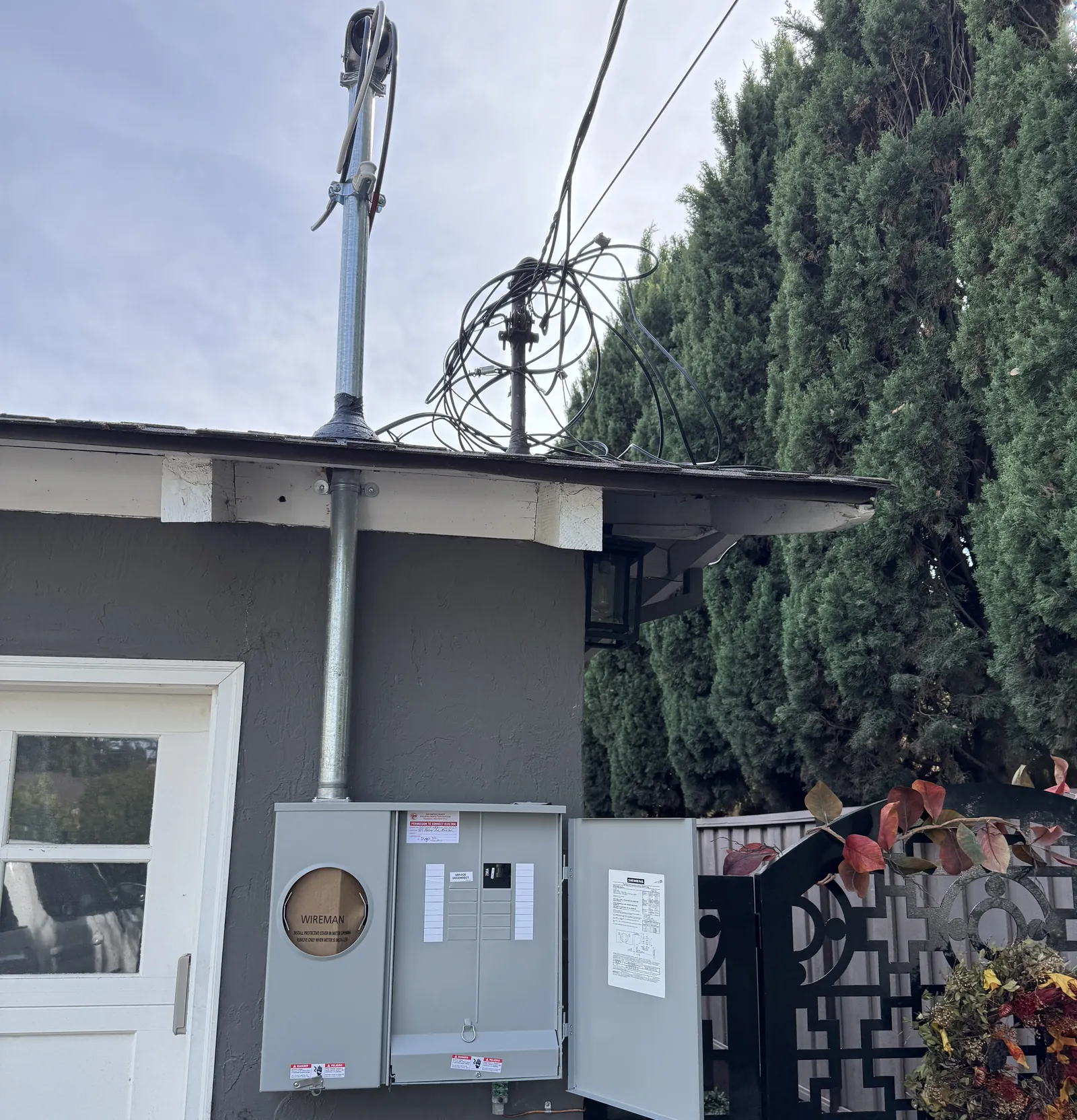
The key factors behind the timeline
1. Is there enough capacity on the existing transformer?
Your home is fed by a utility transformer, often shared with neighbors. If the transformer can handle your new, larger service, PG&E can move ahead with the connection. If not, it has to be upgraded first.
2. Can the existing pole support a new transformer?
A bigger transformer is heavier. If the current pole can’t carry it, the pole has to be replaced as well. A pole replacement typically takes 9 months or more. A transformer replacement can take anywhere from 9 months to several years.
3. Does the panel location meet PG&E’s clearance rules?
PG&E has its own requirements for where a meter and panel can go. If the existing location doesn’t meet them, the new panel has to be moved to a different spot on the house. That means rerouting all of the circuits from the old panel location to the new one, plus extra time for PG&E to review the new location and approve the paperwork.
What else can slow it down
Some of the most common delays come from what’s around the panel:
- Gas. PG&E requires separation between electrical equipment and the gas meter set. For example, its rules don’t allow electrical panels or conduit within a 36-inch radius of a gas regulator vent. A gas meter too close to the panel can force a relocation.
- Water lines. A water pipe running under the panel can be a problem.
- Roof downspouts. A rain gutter downspout next to the panel shouldn’t be there either.
Each of these can add design changes, extra work and another round of review with PG&E.
So how long does it really take?
Put all of that together and a typical overhead service upgrade can take anywhere from two months to several years on the PG&E side. In practice, the timeline HAXX sees most often is around six months.
The takeaway: if you’re planning a panel upgrade for a heat pump, an EV charger, solar or a remodel, start the conversation early, well before you need the extra capacity.
Planning a panel upgrade? HAXX handles the whole project, from load calculation and permits to coordinating with PG&E and the final connection. Learn more about our electrical panel upgrades or find your city.
Do you have one of these panels?
If your home has an older panel from one of these brands, or one of these recalled products, it’s worth having it looked at:
- Zinsco panels
- Federal Pacific panels
- Challenger circuit breakers
- Square D (Schneider Electric): in 2022, Schneider Electric recalled QO Plug-on-Neutral load centers manufactured between February 2020 and January 2022 because they can overheat.
- Siemens and Murray: a 2010 recall covered certain circuit breakers, load centers and meter combos made in mid-2010.
- Eaton (Cutler-Hammer): a 2014 recall covered select MBED meter breakers sold in California and Nevada.
Recalls cover specific models and date codes, so having one of these brands doesn’t automatically mean your panel is affected. A licensed electrician can check the labels and tell you where you stand.
Frequently asked questions
How long does PG&E take for a panel upgrade?
For an overhead service upgrade, anywhere from about two months to several years, depending on transformer capacity, the pole, and whether the panel has to move. HAXX most often sees around six months.
Why would my panel need to be moved?
If the current location doesn’t meet PG&E’s clearance requirements, for example because it’s too close to the gas meter, the new panel has to go somewhere else, and the circuits have to be rerouted to it.
What can I do to speed things up?
Start early. Let your contractor review the panel location, gas meter, water lines and downspouts up front so the design is right the first time and the application to PG&E isn’t sent back.
Thinking about a panel upgrade? Call HAXX Heating, Air & Electrical at (408) 901-8315 or book online. We’ll help you plan it and do everything we can to make the upgrade go smoothly.
← All articles