
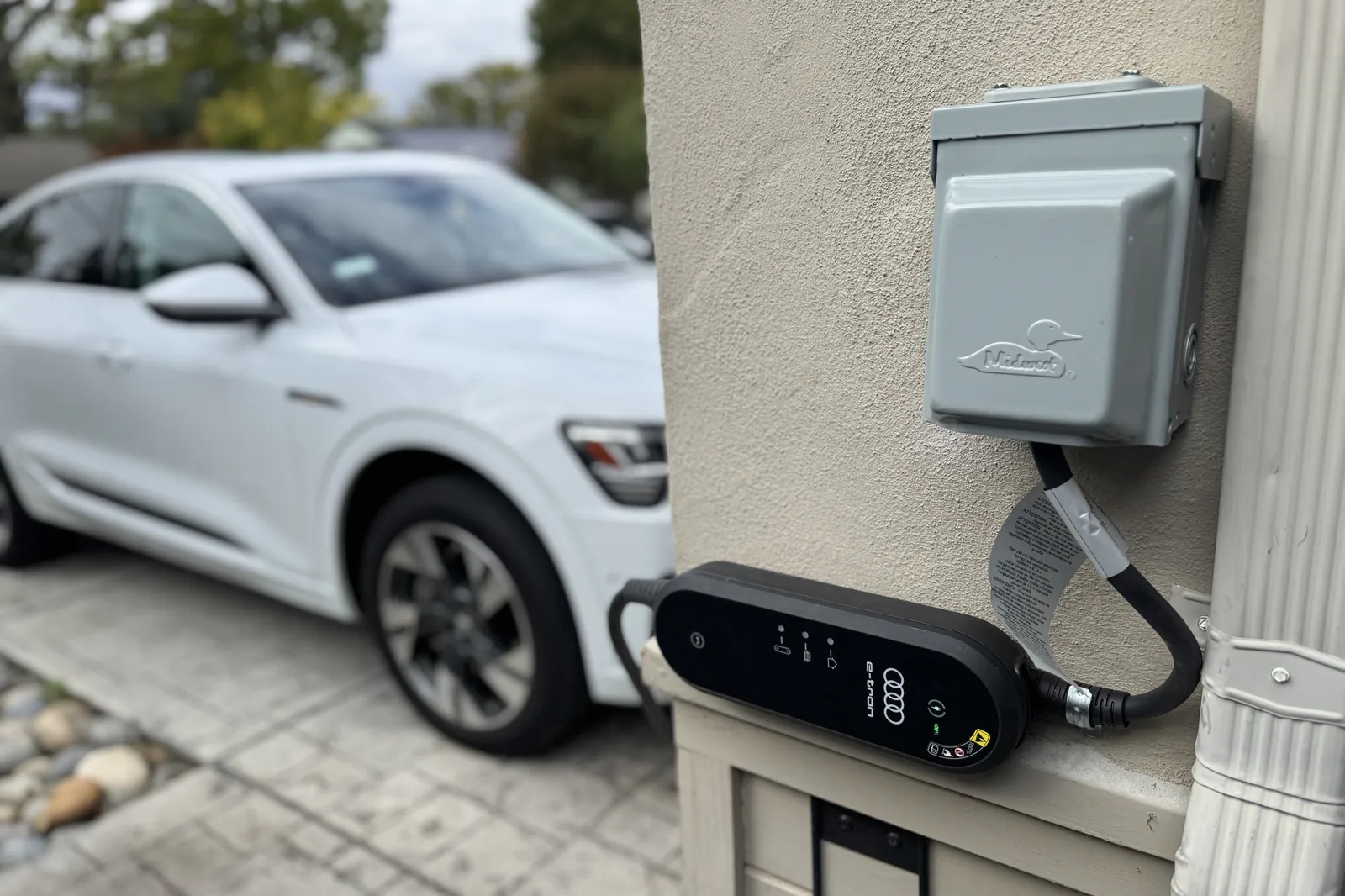
When it comes to charging an electric car at home, the shortcut can look like the smart choice. Skip the permit, grab a long extension cord, plug the charger in and save some money. In practice, the “short way” almost always turns into the long way, and the money you thought you saved comes back as repairs, or worse.
Here’s a real HAXX project that shows exactly why.
The call: “My car isn’t charging fast enough”
A client in San Jose called us because their electric car wasn’t charging properly. It was charging, but much more slowly than it should have.
When we got there, we found the setup. The car’s portable charger wasn’t plugged into an outlet near the car. Instead, it was plugged into a 50-foot extension cord, and that extension cord was plugged into the outlet.
What we found: a burned plug and receptacle
When we unplugged everything, the problem was obvious. One of the lines in the connection had overheated and burned. The receptacle end of the extension cord was charred around one slot.
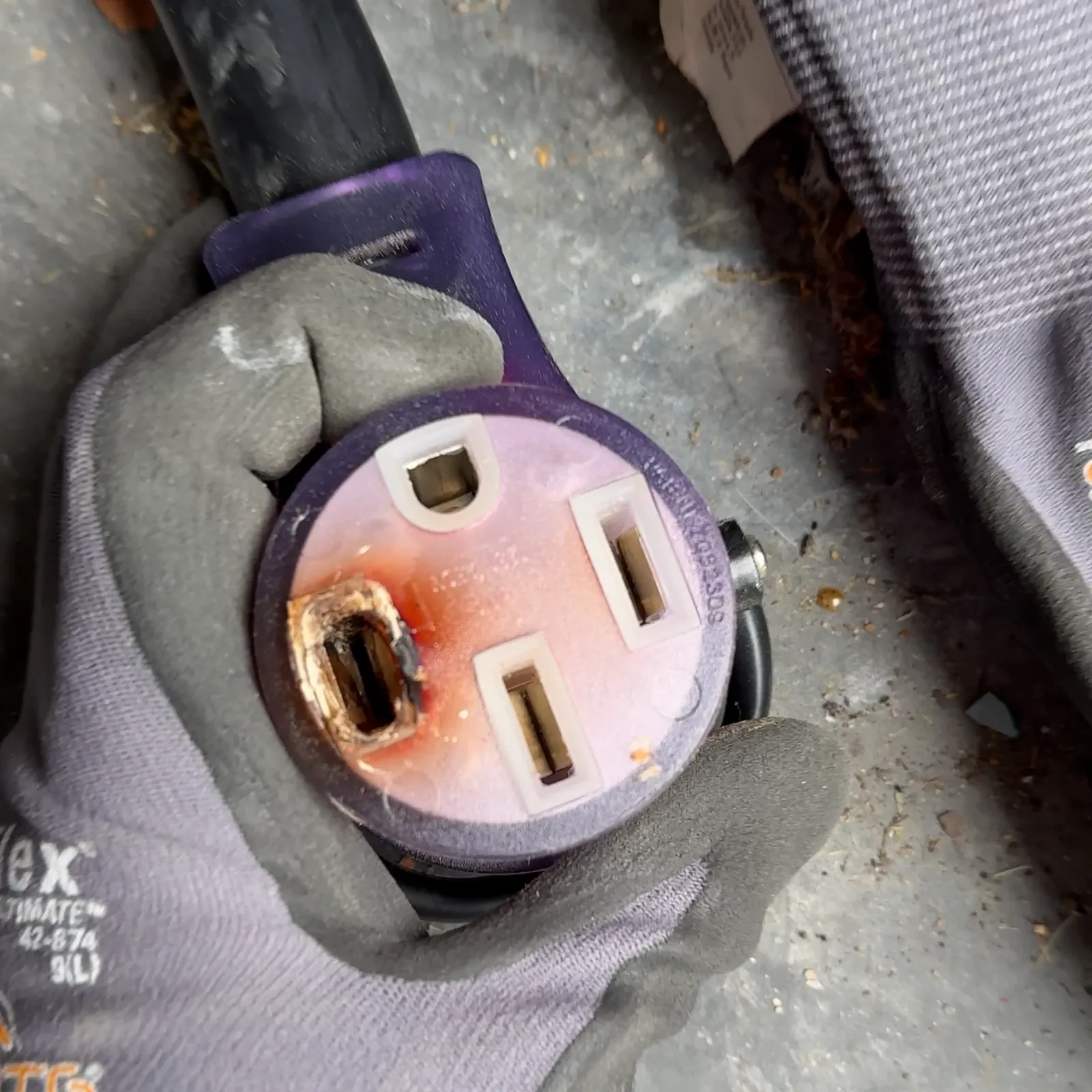
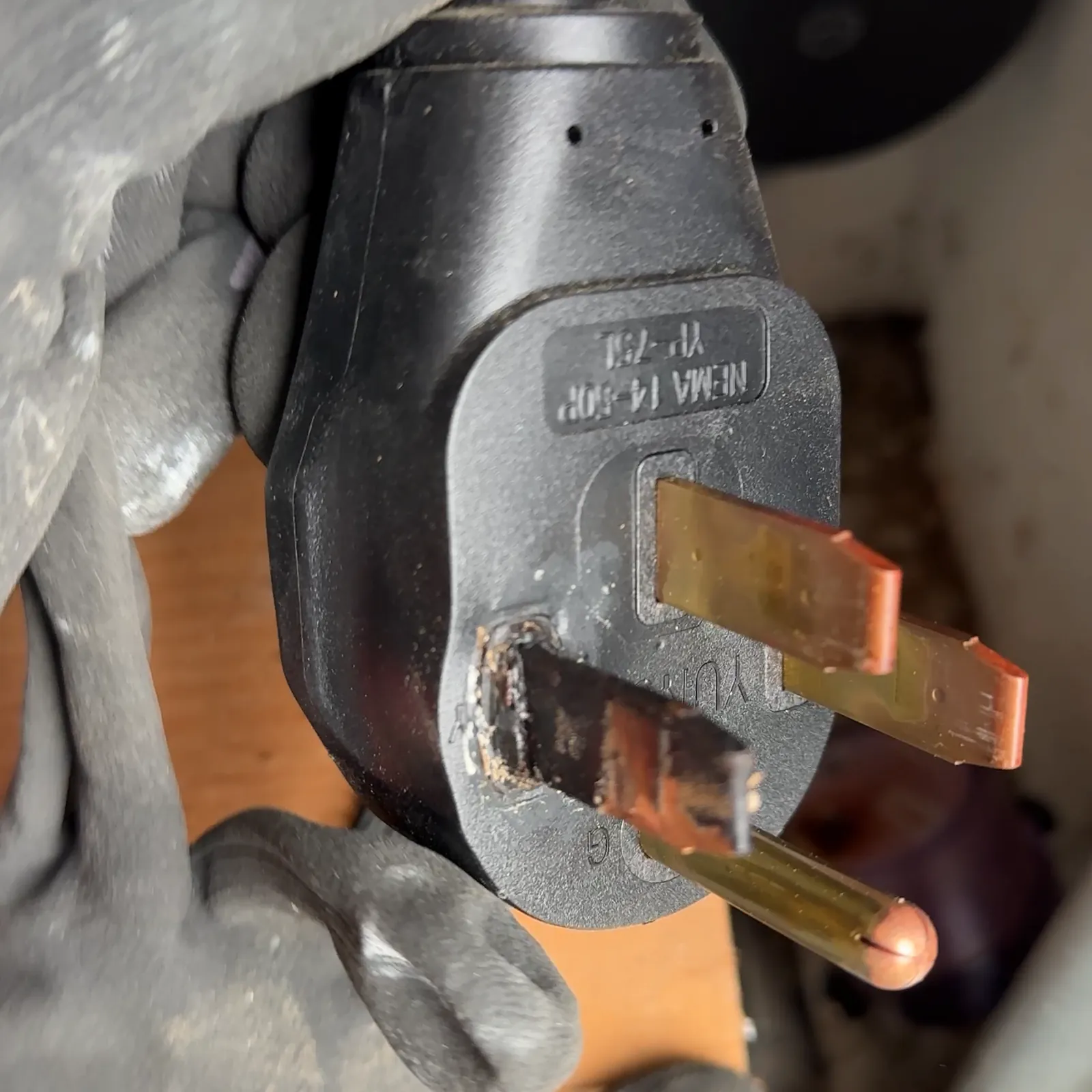
And the matching blade on the charger’s plug was burned as well.
Why extension cords and EV chargers don’t mix
An EV charger isn’t like a lamp or a phone charger. It pulls a large amount of power, and it does it for hours at a time. That puts every part of the connection under steady stress.
- Every connection adds resistance. Each plug and receptacle is a point where heat can build up. An extension cord adds two more of them.
- Long cords lose power. A 50-foot cord adds length and resistance, which means more heat and less power reaching the car.
- Loose or worn contacts get hot. Under a long, heavy load, a connection that isn’t tight and clean can overheat, char and eventually burn, just like it did here.
That’s also why EV charger manufacturers warn against using extension cords with their equipment. In this case the slow charging was a warning sign. If the client hadn’t called, the overheating could have kept getting worse.
Need a safe place to charge your EV? HAXX installs home EV chargers with the right circuit and the fewest possible connections. See our EV charger installation in San Jose or learn more about EV charger installation.
The right way to set up EV charging
The safest setup is the simplest one: a dedicated circuit, sized for the charger, that ends right where you park. That’s exactly what we did here.
With a permit, HAXX ran a new dedicated circuit, wired directly from the electrical panel to a new NEMA 14-50 EV charger outlet in a weatherproof box on the wall, right next to where the car parks. Now the charger plugs straight into that outlet, with no extension cord in between.
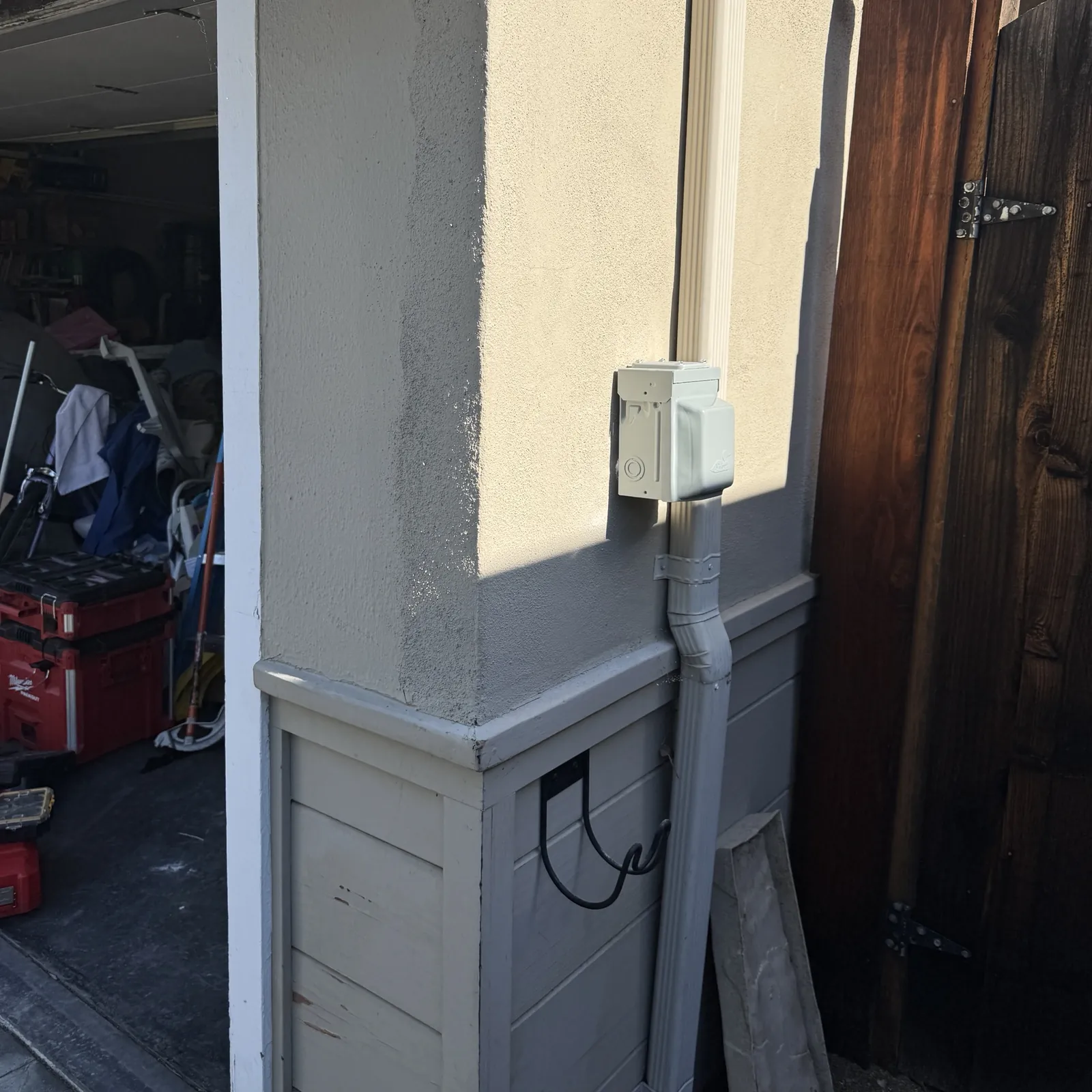
- Use a dedicated circuit. Hardwire the charger when you can. If it plugs in, it should go into a dedicated EV charger outlet installed right where you park. Fewer connections means fewer places for heat to build up.
- Never use an extension cord. Not a long one, not a short one, not a heavy-duty one.
- Put the power where the car is. If the outlet is too far away, the answer is a new circuit to the parking spot, not a longer cord.
- Get a permit. Permitted work is inspected. Skipping the permit might save a little at the start, but it often costs much more later.
Frequently asked questions
Can I use an extension cord with my EV charger?
No. EV chargers draw a lot of power for hours at a time, and every extra connection is a place where heat builds up. Charger manufacturers warn against extension cords, and this job shows why.
Why is my EV charging slower than it should?
There are several possible reasons, but a long extension cord or a poor connection is one of them. If charging is slow and you notice heat, discoloration or a burning smell at the plug, unplug it and call a licensed electrician.
Is a hardwired EV charger better than a plug-in one?
A hardwired charger has fewer connections, which means fewer points that can loosen and overheat over time. For most homes it’s the setup we recommend.
Charging your EV at home? Call HAXX Heating, Air & Electrical at (408) 901-8315 or book online. We’ll set it up safely, the first time.
← All articles