
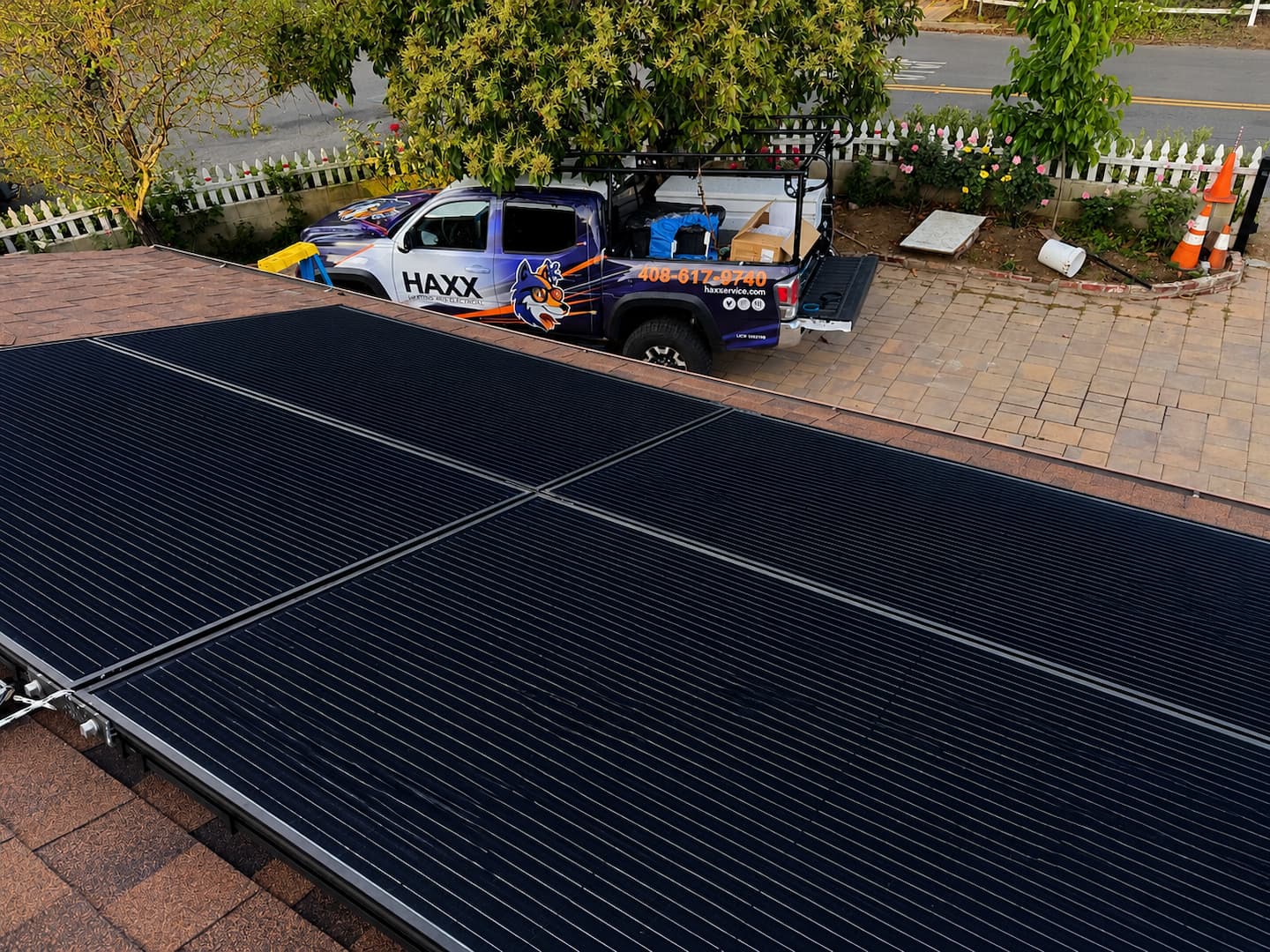
Electrical Service | Solar Installation
San Jose solar installation for properties ready for a more organized energy plan.
A solar project should make sense on the roof, at the panel and in the way the property actually uses power. HAXX approaches solar installation with attention to roof fit, electrical integration, current usage and future demand so the finished system supports more than a simple equipment sale.
Project Fit
Good solar projects usually line up roof conditions, electrical readiness and real power use at the same time.
Solar installation is not only about adding panels. The project has to make sense in terms of usable roof area, electrical tie-in, current energy habits and how the property is expected to evolve over the next few years.
The strongest solar installs begin with a clearer read on the property.
HAXX treats solar as an electrical and property-fit project, not only a roof product. That means planning the system around site conditions, current usage and whether the rest of the electrical setup can support the direction the property is heading.
Available roof space, layout and exposure influence whether the design can stay practical and productive over time.
The panel and service arrangement matter because solar has to integrate cleanly into the broader electrical system.
The system should reflect how the property actually consumes energy instead of being sized around generic assumptions.
EV charging, electrification and added equipment should be part of the conversation if they are already on the horizon.
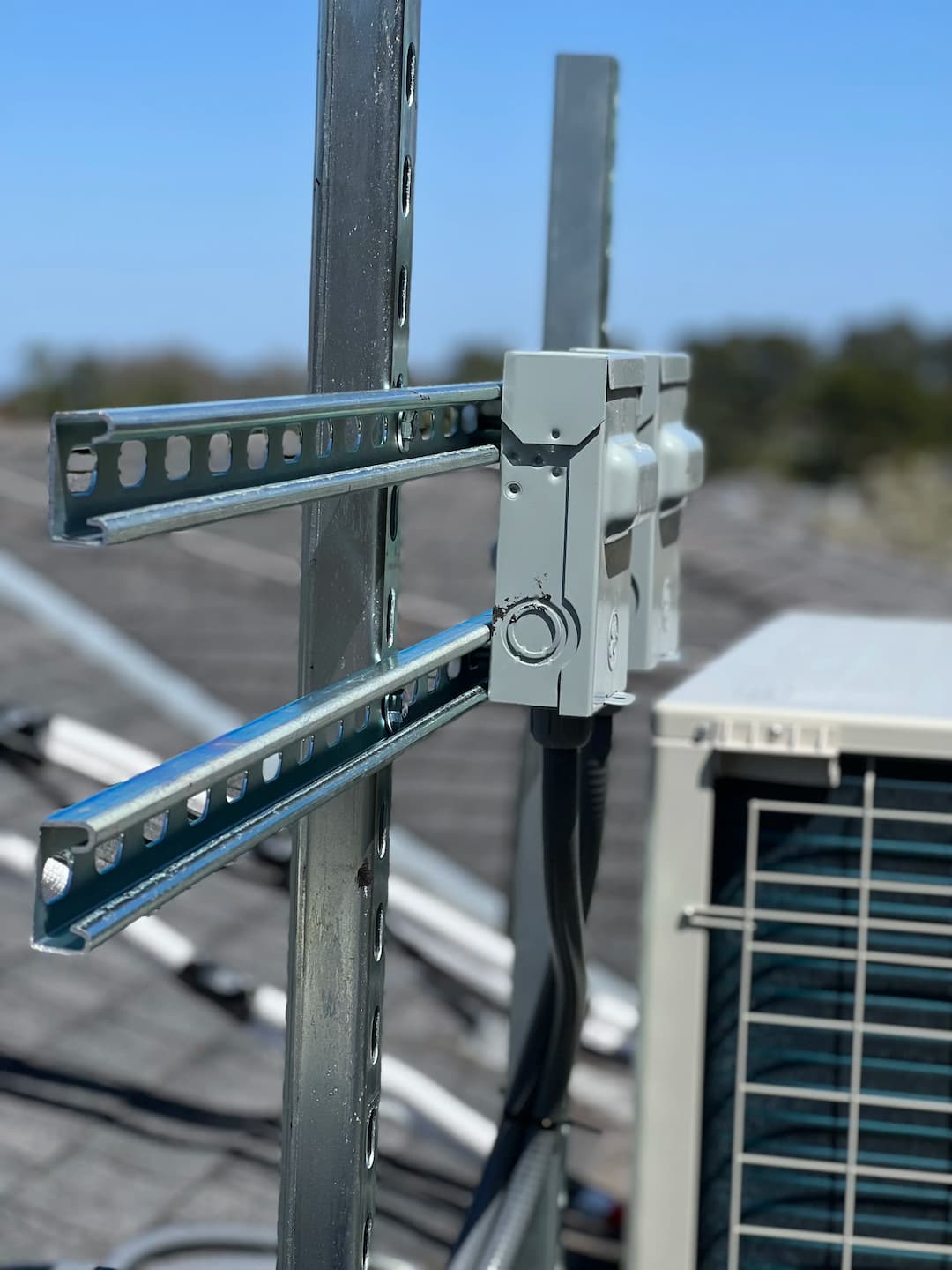
The project should fit the property, not just the sales story.
A cleaner solar install usually comes from saying no to assumptions early. Better roof fit, better panel awareness and better planning around future energy use all make the finished system feel more grounded.
System Path
Solar should be planned as one system connecting production, panel integration and the property’s next energy moves.
The installation needs to work as more than a collection of components. Roof layout, electrical tie-in, usage goals and future equipment all influence whether the project stays useful after the install is complete.
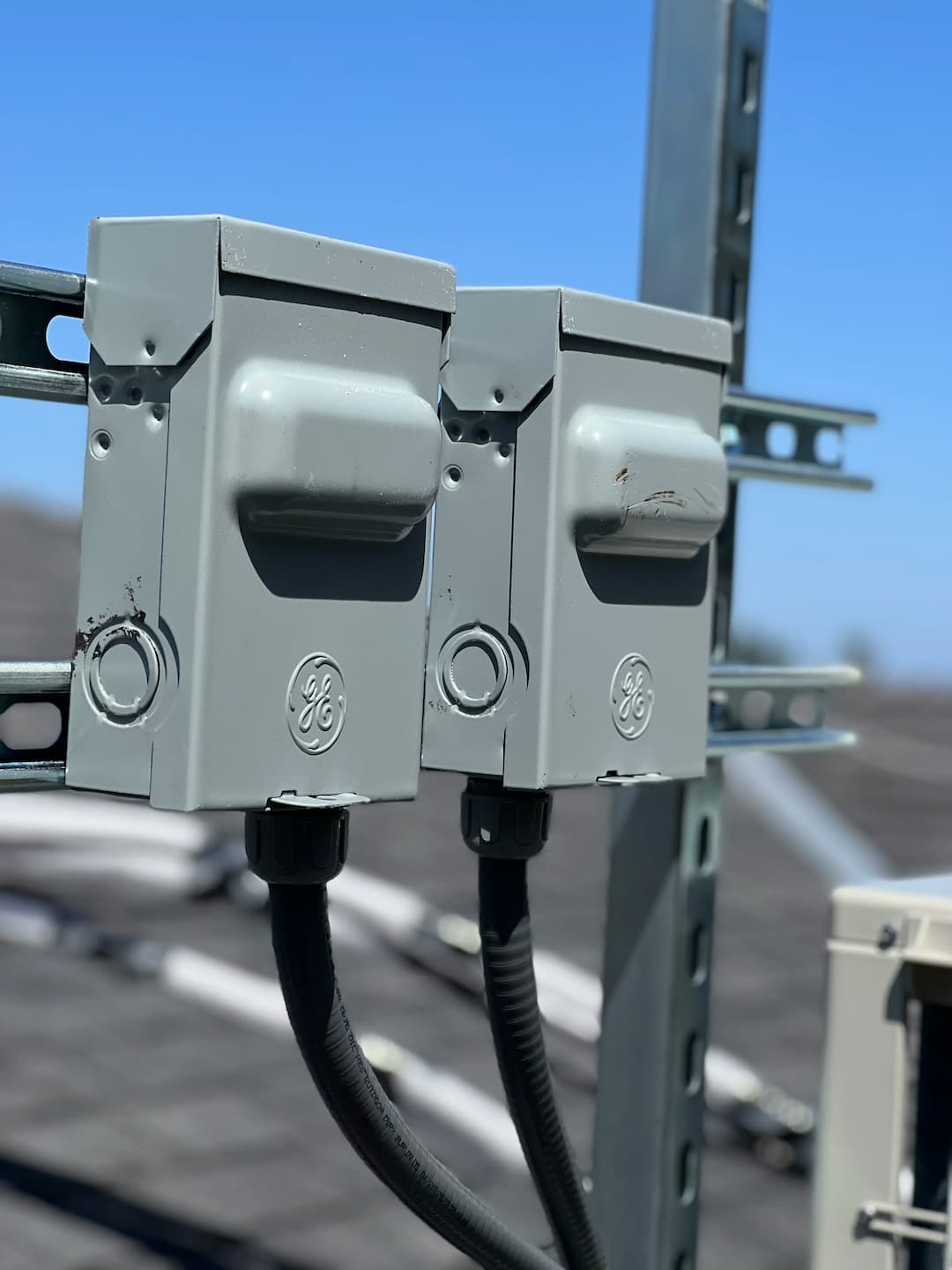
The technical side matters because solar only delivers long-term value when the electrical side is solved properly too.
A panel that is already tight, a future EV charger or a property moving toward electrification can all change what the stronger solar path looks like from the start.
The solar path should answer where power comes from, where it lands and what the property is becoming.
Scope depends on the site, but most solar installs come down to the same big questions: how the roof supports the array, how the system ties into the electrical base and whether the property’s next loads are already visible enough to influence the plan.
The array should be shaped around usable roof conditions instead of forcing a design that only looks clean on paper.
Solar has to connect into the property’s electrical system in a way that feels intentional and ready for normal operation.
The system should reflect how the property uses power now rather than being built around a vague target.
If EV charging or larger electric equipment is coming, the solar conversation should not ignore that next layer of demand.
The install should feel organized across design logic, electrical work and how the property owner understands the scope.
The finished result should feel like a better energy system for the property, not just equipment added to the roof.
The goal is not simply to place panels overhead. It is to leave the property with a solar system that fits the roof, respects the electrical base and aligns with the next phase of energy use more cleanly.